Predictive FinTech

Predictive FinTech

Overview

Overview

A model-driven interface prototype that explores how financial products could adapt in real time based on behavior, signals, and predictions. This project simulates a future where financial interfaces surface insights before users search for them: spending patterns, upcoming bills, likely transfers, and forecasted balances — all woven into the UI as adaptive state changes.

Category

Predictive Interface Prototype

Industry

Technology, Productivity,

Project Type

/

Product Design

/

UX/UI Design

Technologies Used

Figma

Overview

A model-driven interface prototype that explores how financial products could adapt in real time based on behavior, signals, and predictions. This project simulates a future where financial interfaces surface insights before users search for them: spending patterns, upcoming bills, likely transfers, and forecasted balances — all woven into the UI as adaptive state changes.

Category

Predictive Interface Prototype

Industry

Technology, Productivity,

Project Type

/

Product Design

/

UX/UI Design

Technologies Used

Figma

My Approach

My Approach

My Approach

In the exploration phase, I mapped out the financial moments where predictions would genuinely matter to a user. This included upcoming bills, recurring transfers, unusual spending patterns, paycheck expectations, and short-term forecasts.

To simulate model logic without connecting to a real system, I sketched a simple structure that mimicked how a predictive loop might behave. The inputs were basic patterns in user behavior and spending. From there, the system generated signals—things like “you usually transfer $200 on Fridays.” Those signals fed into lightweight model outputs such as forecasted balances, anomaly alerts, or reminders. The interface then responded with subtle state changes: cards shifting, highlights appearing, or new modules surfacing when needed.

Key Features

Key Features

Key Features

One of the core features of the prototype is the predictive balance forecast, which presents a seven-day projection directly within the main balance card.
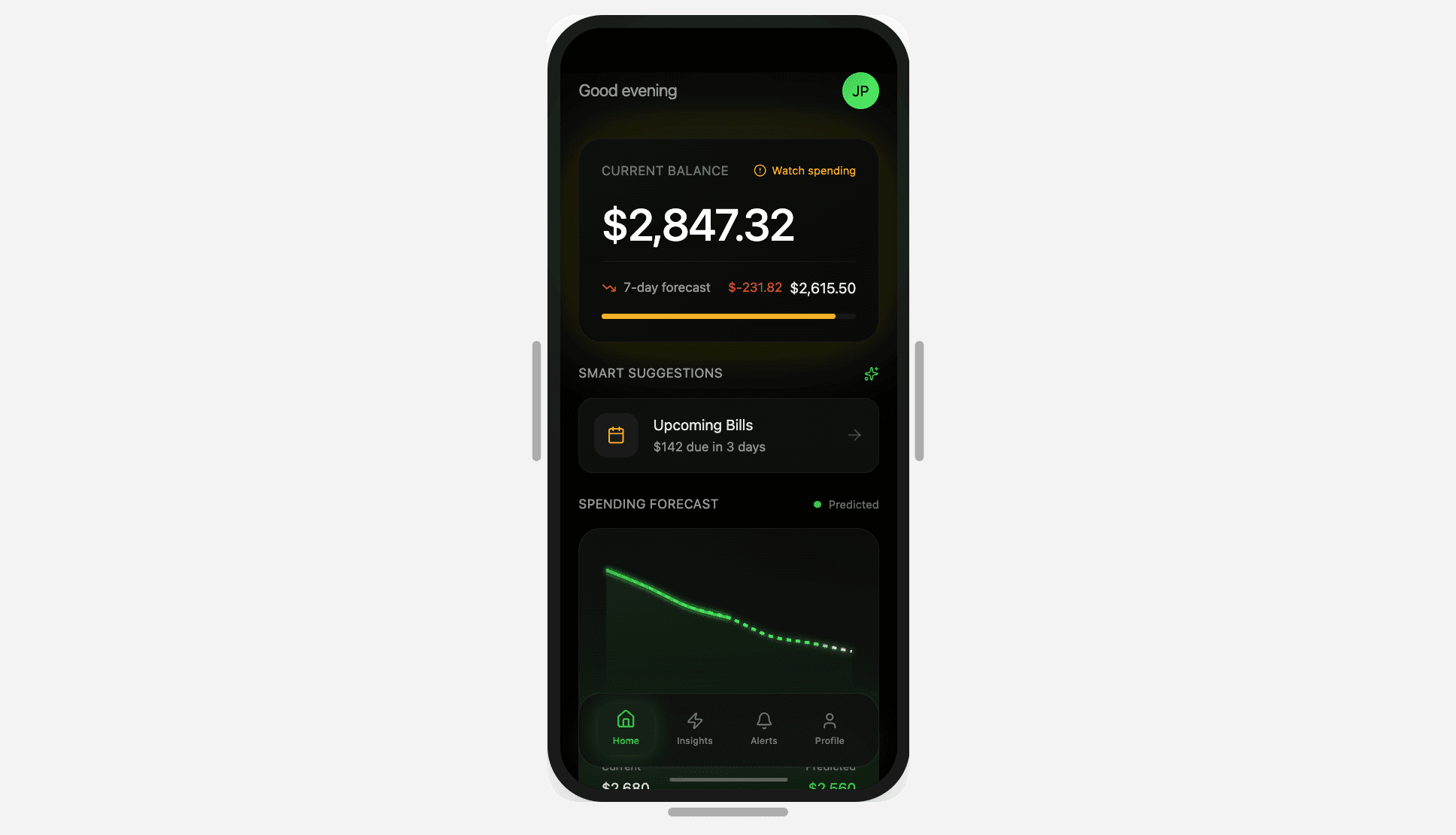
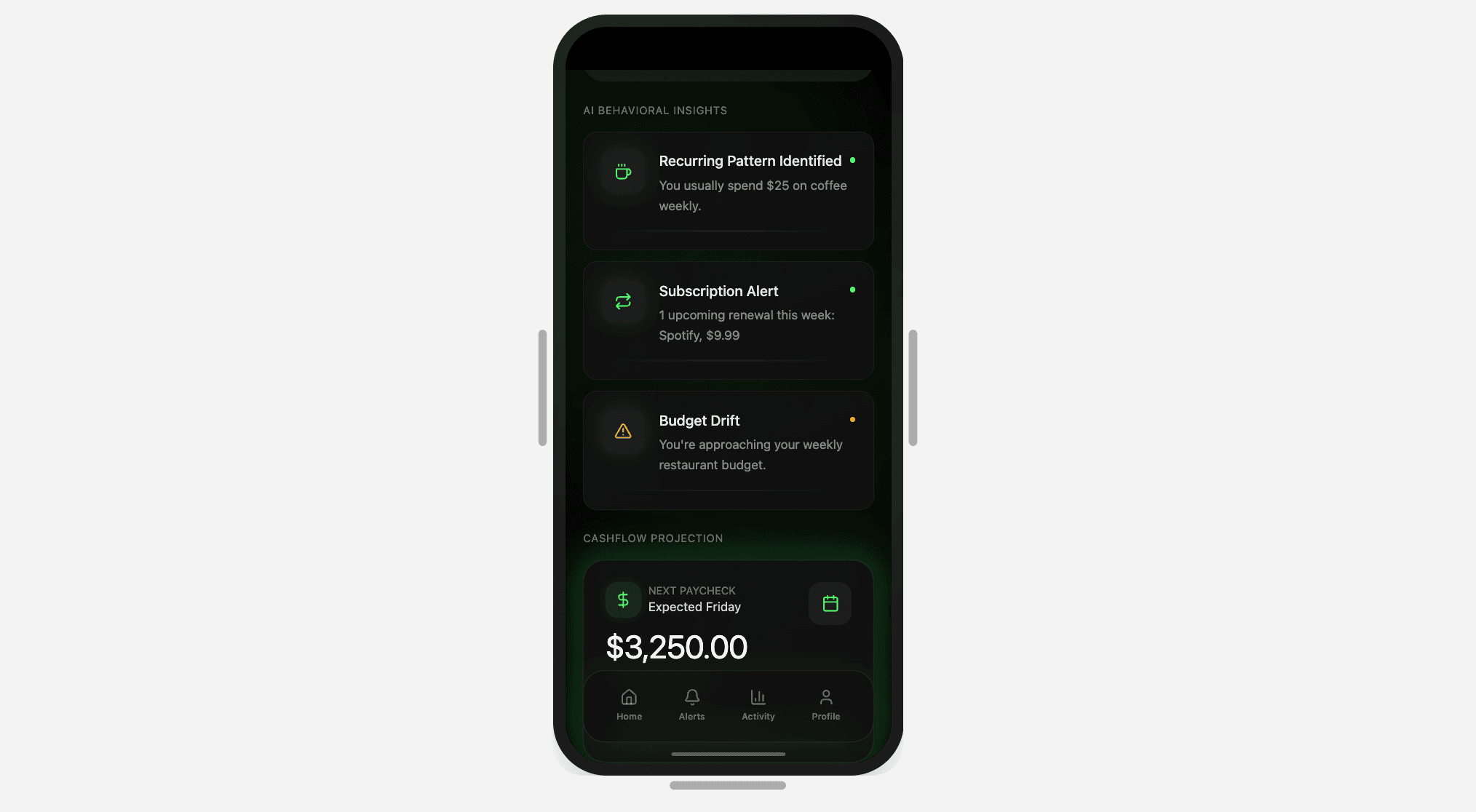
Another feature is the set of behavior-based suggestions that appear only when they’re truly relevant. The design also includes a 14-day spending graph—a simple, animated line chart that projects short-term peaks and dips. On top of these components, the interface itself shifts in real time. Cards rearrange, highlight new information, or surface modules when the model detects something useful. The small changes in layout simulate how a predictive system might respond moment-to-moment, making the product feel more alive and context-aware.

H.E.R.

Have a project in mind?

By submitting, you agree to our Terms and Privacy Policy.

© 2025 Hayley E. Robinson

Get in touch.

Have a project in mind or looking to collaborate? I’d love to hear about it. Let’s build something meaningful together.

Quick response.

I value your time. You’ll hear back from me within 1–2 business days.

Clear next steps.

I’ll outline the process and timeline so you know exactly what to expect.

HCI Designer

Hayley Robinson

H.E.R.

Have a project in mind?

By submitting, you agree to our Terms and Privacy Policy.

Get in touch.

Have a project in mind or looking to collaborate? I’d love to hear about it. Let’s build something meaningful together.

Quick response.

I value your time. You’ll hear back from me within 1–2 business days.

Clear next steps.

I’ll outline the process and timeline so you know exactly what to expect.

HCI Designer

Hayley Robinson

H.E.R.

Have a project in mind?

By submitting, you agree to our Terms and Privacy Policy.

© 2025 Hayley E. Robinson

Get in touch.

Have a project in mind or looking to collaborate? I’d love to hear about it. Let’s build something meaningful together.

Quick response.

I value your time. You’ll hear back from me within 1–2 business days.

Clear next steps.

I’ll outline the process and timeline so you know exactly what to expect.

HCI Designer

Hayley Robinson